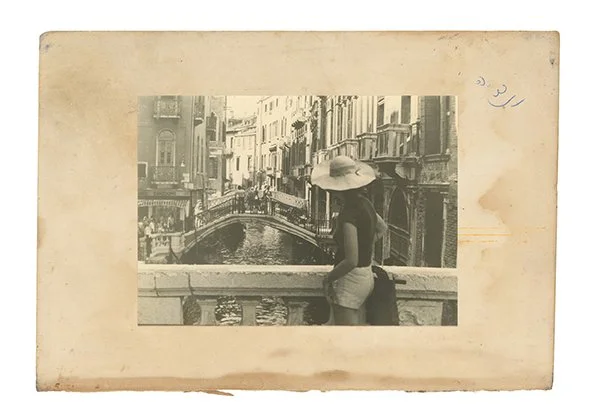
Aneta, 2023
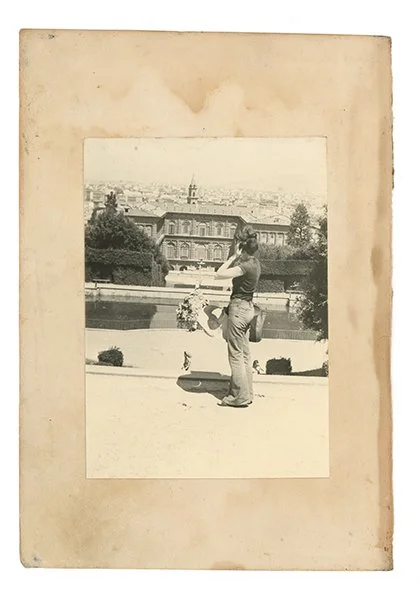
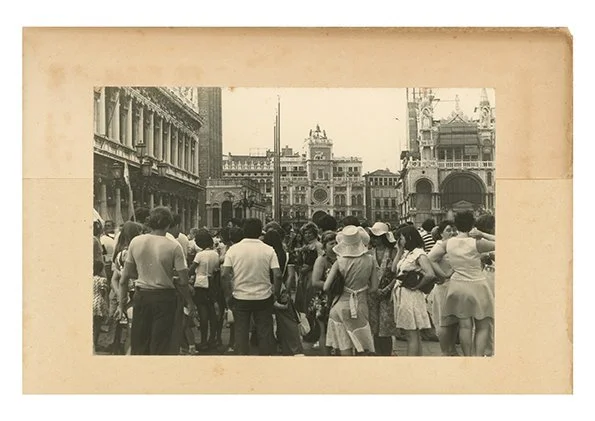
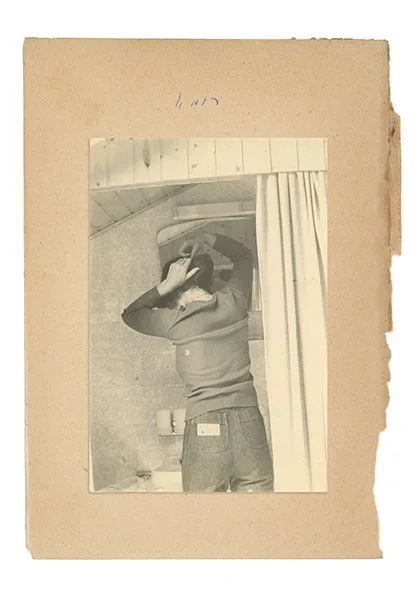
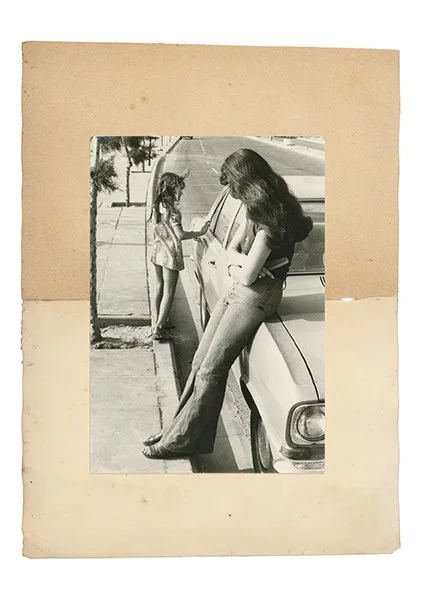
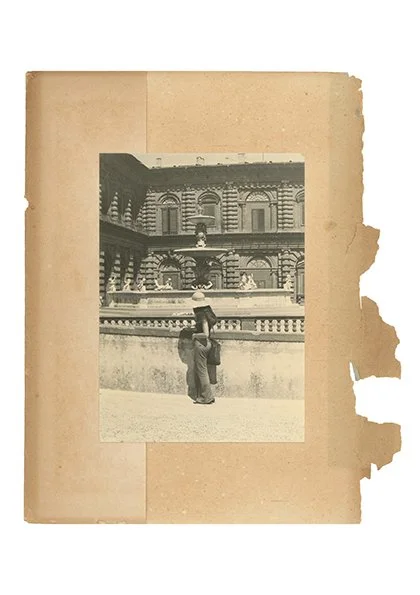
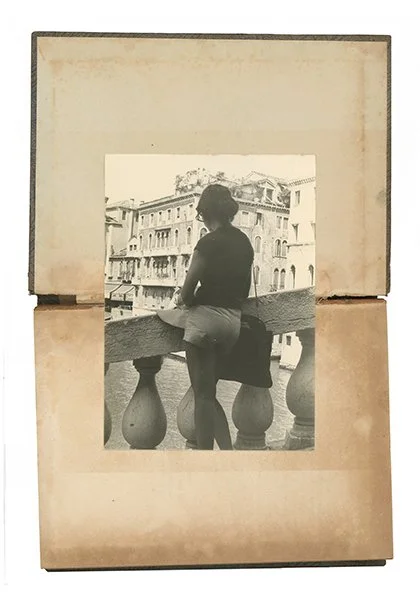
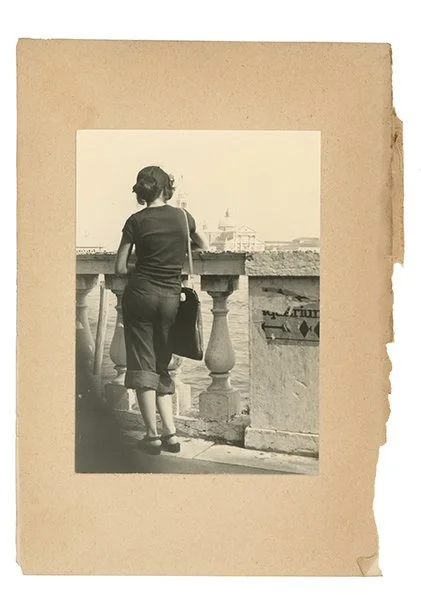
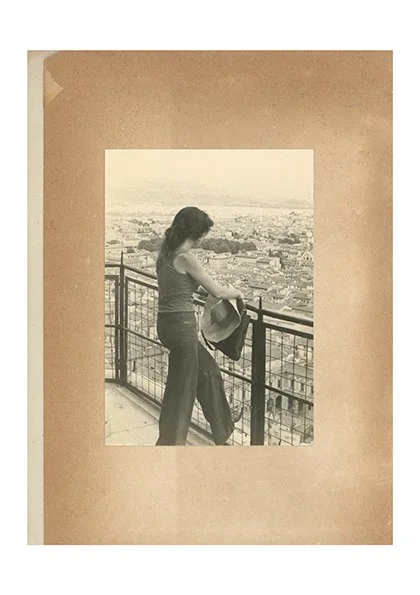
In the series Aneta by artist Naama Klaiman, she uses old photographs of her mother, taken by her father during a trip to Italy. The mother is photographed from behind, rendering her a mysterious, almost anonymous figure. Klaiman places these photographs against the backdrop of an old edition of the novel Jean-Christophe: L’Âme Enchantée (The Enchanted Soul) by Romain Rolland—a book that accompanied her family over the years and was often quoted by her mother’s parents in their letters to one another.
This series is part of the artist’s broader research into anonymous photo albums she collects on eBay, which she merges with her own family albums. In doing so, she reflects on the meaning of memory as it oscillates between anonymity and intimacy, and between the personal and the collective. The mother, shown from behind as an elusive figure, blurs the line between Klaiman’s personal memory and the collective memory of shared human experiences. The images become every memory, offered to the viewer while engaging with universal human themes.
The Enchanted Soul tells the story of European society’s disintegration at the dawn of the 20th century, just before the outbreak of World War I, through the life of Aneta—an individualistic woman navigating the challenges of her time and society. Rolland, also known for his biographies of prominent Western cultural figures such as Tolstoy, Beethoven, and Michelangelo, presents Aneta as a fictional character who wrestles with questions of identity, freedom, and the soul.
Klaiman’s use of Aneta’s name for the series links her mother’s personal biography to the literary character, inviting reflection on how we relate to personal memories and collective history.
Yoad Bar Noy